February 2026 Newsletter
In this month’s newsletter, we chatted with Scott Benson about 9 years of Night in the Woods. Plus, Bekah and Adam Saltsman told us a bit about how our team is making Usual June feel like home. You can sign up for the newsletter here!
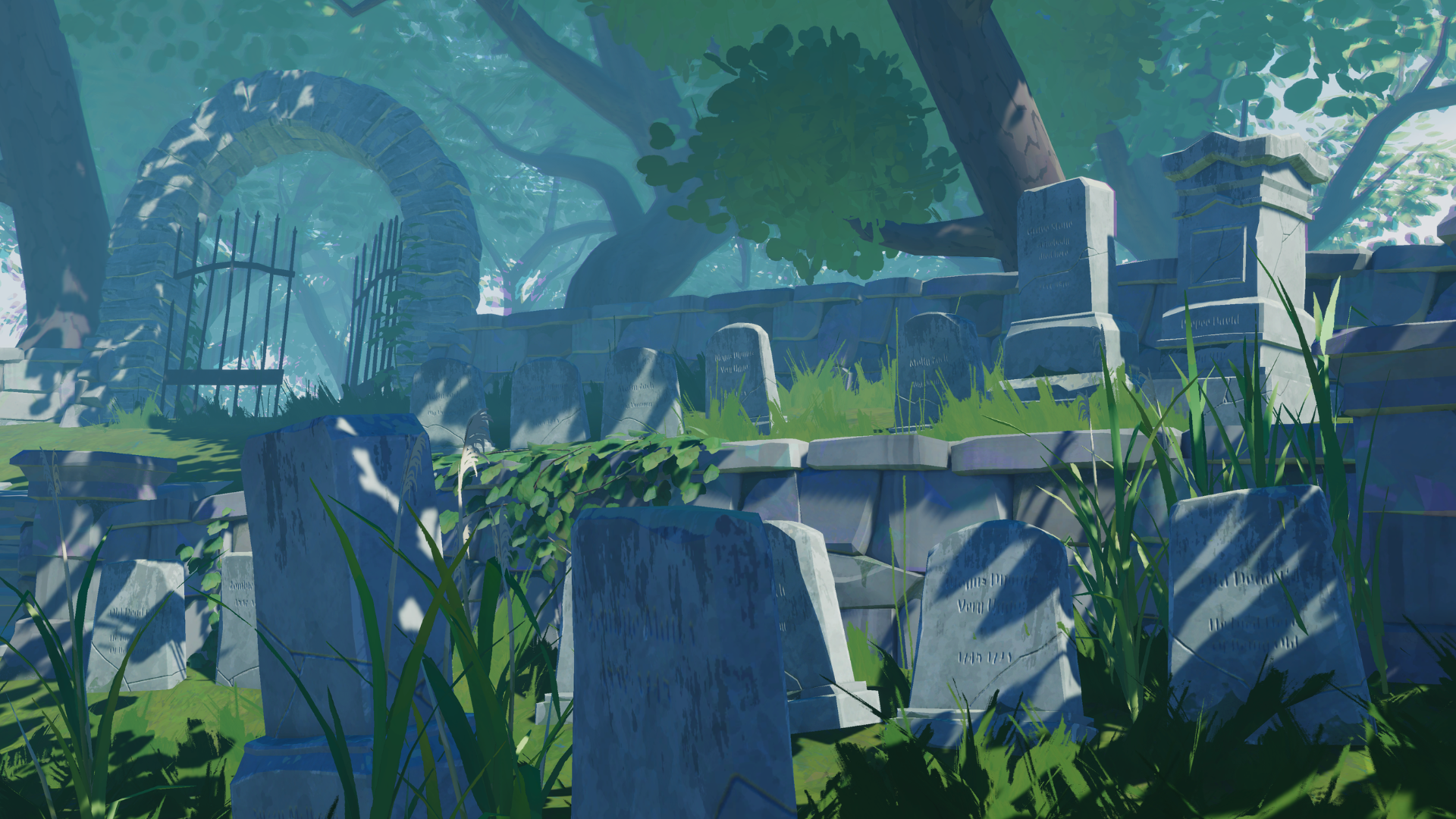
Usual June takes place in the midwest, and that means it’s weird.
Lately, the Usual June team has been focusing a lot on building Fen Harbor, the fictional town where the game takes place. Fen Harbor is heavily inspired by the midwest, so we asked Finji Co-founders Bekah and Adam Saltsman to tell us why they wanted to place Usual June in a midwest town.
Bekah - I wanted to tell a story about my home and the people who live here. So many of the movies and books in the US take place on the coasts, in cities like Los Angeles or New York, and the culture and stories of the flyover states is largely unrepresented. Our towns, though, have layered histories that were (and still are) colored by hundreds of years of government intervention, capitalist oligarchs, industrialization, and the migration waves of both large international immigrant populations and the resettlement of the freed slaves post-civil war. The midwest is fascinating! Why did they change the flow direction of the Chicago river? Why was Chicago raised 8 feet? How many shipwrecks are on the Great Lakes? Did you know that in 1940 November 50 hunters in the midwest froze to death when the temps dropped too fast in an extreme type winter storm that generally happens every few years? Why are the thunderstorms so violent and the tornadoes so common and huge? What about these midwest cities makes you stay? I wanted to tell a ghost story and what better way to tell that story than to write about our ghosts: both human ghosts and the ghosts of the city which is told through known and forgotten histories.
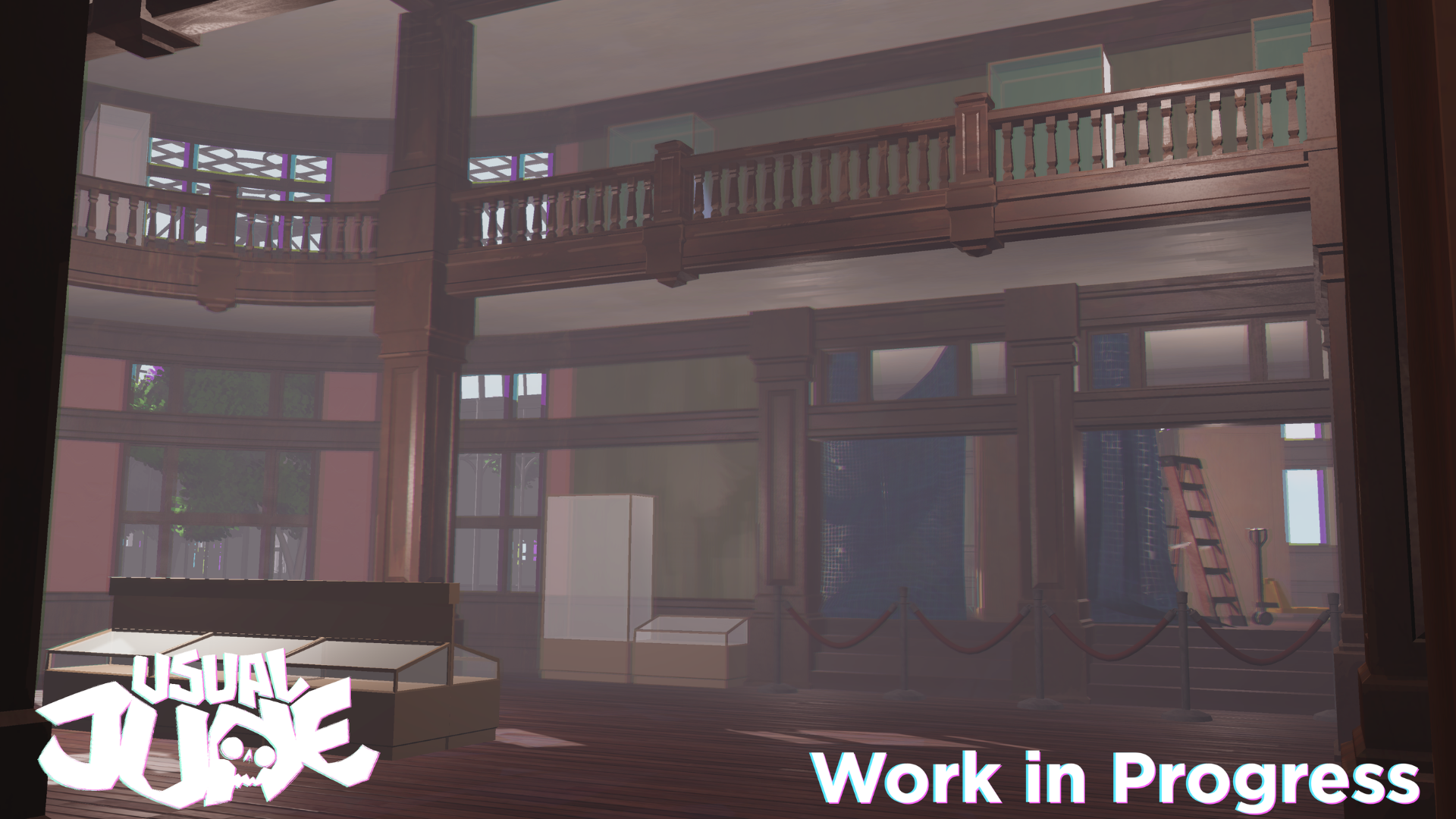
Adam - The short answer is I wanted to place Usual June in the midwest because that’s where I grew up and that’s where I am raising my own kids.
The slightly longer answer is because the midwest is a really weird rich place to tell stories, especially mystery stories. Time and memory work weird here. Less than a century ago, Detroit and Cleveland were among the most important cities in the world. Growing up in the 1980s, Detroit was mainly known for Robocop, who is not even real (probably). The “now” of cities here can feel like “always”, but it isn’t… the way the past can disappear here, the way it can be rewritten by barons like Henry Ford, makes it the perfect place to tell a ghost story.
And cities here are kind of architecturally fantastic, like in the sense that they seem like something from an urban fantasy story… did you know Detroit has a massive salt mine under it? Not nearby, not adjacent, like directly underneath it? Don’t worry, it’s way down there. But that’s wild to me. The bedrock below Grand Rapids, where I live, is riddled with gypsum mine tunnels. Tunnels is almost misleading, some of these spaces are subterranean quarries. And every business here is the third or seventh or eleventh thing occyping the same building, like the rings in the trunk of a tree. Level design is easy here.
An Interview with Scott Benson
It’s been 9 years since the release of Night in the Woods, so Finji Social Media & Community Director Aster Wright spent some time chatting with Co-creator Scott Benson. They talked about everything from inspirations for NITW characters, Scott’s love of astrophotography, to what Scott is working on now.
Aster - It’s been 9 years since the release of Night in the Woods, yet new players discover it and join the NITW community every day. When you were working on it, did you have any idea that the game would have this kind of impact?
Scott - Not at all. My hopes were a lot smaller, and if you talk to Adam and Bekah they will tell you that the day after release I was prepping my portfolio to go re-enter freelance animation because I didn’t think it would hit. Why would it? We were doing some things that weren’t so much new at the time as specific in a way that felt unique. I remember early on there were articles with the angle of “you can play as a cat?? In a normal town??” and while those weren’t groundbreaking things in games at the time it somehow just had a vibe that made it seem special to some folks. Which is nice! Thanks.
Aster - So many fans say that Night in the Woods has changed their life. They are not the same person after playing it. I’m sure you hear that all the time, too. Why do you think that is?
Scott - I mean I’d be lying if I said I fully knew. I do know when I’ve had that kind of experience with a game/movie/album etc it’s because in hindsight I was waiting for something I didn’t know I was waiting for. There’s this concept of permission, like not in an authority sense but in the sense that you see or hear something that makes you go RIGHT ok yeah that’s a green light and now I can go. You didn’t know you were waiting for it and now you can think or say or do or be something new. As a creator one of the best things ever is knowing something you made had a part in that. I can think of albums that changed my life, where I can still clearly remember the first time I heard them, and remember what that felt like. It was already something I had in me, I think I was just waiting for the light to change.
It also helped that the characters and setting are just so normal. It’s a kind of place that tons of people know but at that point at least you just never saw in games. So I think some players looked at these young adults in their extremely accessible outfits and said hey wait a second: I’m also a small town goth, I also couldn’t go to college, or maybe I’m a crocodile in some metaphorical sense or another. I can roll with this. Maybe they’re actual literal small town crocodiles who for the first time saw their struggles depicted.
Aster - What was inspiring you while you worked on Night in the Woods?
Scott - If I was going to list a handful of things, as far as games it was Kentucky Route Zero, Superbrothers Sword & Sworcery, Gone Home, Fez, Cartlife, and Final Fantasy VI. And some Dark Souls because of course, primarily in how it handles missable content. Everyone go play all of these if you somehow have not.
Bookwise I am a big fan of the southern gothic writers and I think of the game as sort of in that genre but for the rust belt. Although there’s less cosmic horror and cartoon animal people in Flannery O’Connor’s work. There’s a short weird horror story called The Dead Valley than I love, and at first there was a bit more of that kind of vibe in the game than there ended up being. It’s for the best but I wanted to shout it out since some folks will probably look these up. Mae’s experience with “Shapes” and the Monstrous Existence convo were inspired both by a real event and also the chestnut tree scene from Nausea by Jean Paul Sartre. There’s some Camus in there as well. And some Lovecraft/general weird fiction stuff obviously. The black goat wasn’t a Lovecraft reference, maybe we both just think black goats are cool and spooky at the end of the day.
The game itself is named after a song by The World/Inferno Friendship Society, and the original ideas for the premise took some from their album The Bridgewater Astral League. I made a comic one time about that album if you want to look it up.
One of the major inspirations was just where we live and what was going on. When we decided to set it in a sort of fantasy Central/Western PA before long it became clear how hollow it would be if we didn’t actually dive into the reality of the place and why things are how they are. I’m not from here originally, I grew up all over the country but mostly in New Jersey, not too far from Manhattan. So when I moved out here I just had no context for why things are like they are. I’d already lived here for 13 years when the game got going but I don’t think it was until we were deep in development that the place really started feeling like home as opposed to just the latest place I’d landed. It was living here that made me delve into the history of labor in the US, and the struggles and eruptions of violence referenced in the game are taken directly from real life. In the town where we currently live 100 years ago the residents fought the klan when they showed up, and kicked their asses. I go down that street all the time and there’s no plaque, no marker, nothing to commemorate a straight up battle between a mob of proto-fascists and a small town. But I do get a feeling of connection, and making NITW ended up being this dive into a feeling of wow we live in history, next door to history, down the street from history, and we’re part of a much longer story that is still going on right now.
Aster - How did you come up with the main cast? I know their design was pretty much locked in from your earliest sketch of them, but what about their characterization?
Scott - I was watching Return Of The Living Dead and thinking about the cartoonish punks and associated crew and how instantly recognizable they each are. There are shots of them goofing down the street and it reminded me of my times hanging out with my beloved punks on street corners and parking lots. At the time I was stuck on the first game idea we’d thought of making, in part because I was drawing human characters and it just wasn’t clicking. So I threw that original story and designs out and doodled our core group in a few minutes. They each had their basic personalities from the start and that stuck, in part just because it was a fun bunch of relationships.
The core cast themselves are based on a mix of people I’ve known and been. I don’t consciously construct characters out of tropes or types or formulas or anything, it’s always coming from somewhere specific and personal first. There is a lot of me in Mae but much of her initial vibe was based on a character from an animated short I never finished, and that character was inspired by two girls I knew earlier in life. One of their names was Margaret, and she was what passed for a delinquent in the christian high school I went to. I thought she was cool and we hit it off. I was a weird little 10th grader hidden within a large army jacket and she was a tough and worldly 16 year old who smoked* and spit and offered to buy any Ritalin I didn’t want**. I didn’t think those things were cool so much as I admired how confidently and casually she broke the rules, and how she responded to a push with a punch. I hope she’s doing awesome. But that’s just sort of where you start with a character. Mae grew into her own person over time. Originally she was much more into smashing up the town but that just didn’t match who she was becoming in the story. Mae loves Possum Springs and needs it to feel like a safe home, so it seemed weird that she’d run around terrorizing the place. Losing the in-town carnage completely changed the feel of the game, for the better we thought. Projects feel like they become what they want to be sometimes. It’s a top 10 weird mental illusion for human brains, that a character they made up is something not originally intended. So as much as her character can be categorized in any number of ways, that was more discovery than design.
Gregg was named after a former bandmate named Greg. You sometimes have to change things when you write fiction. This is a secret trick so please keep it to yourselves. His last name is due to him being the cousin of our friend Benji Lee.
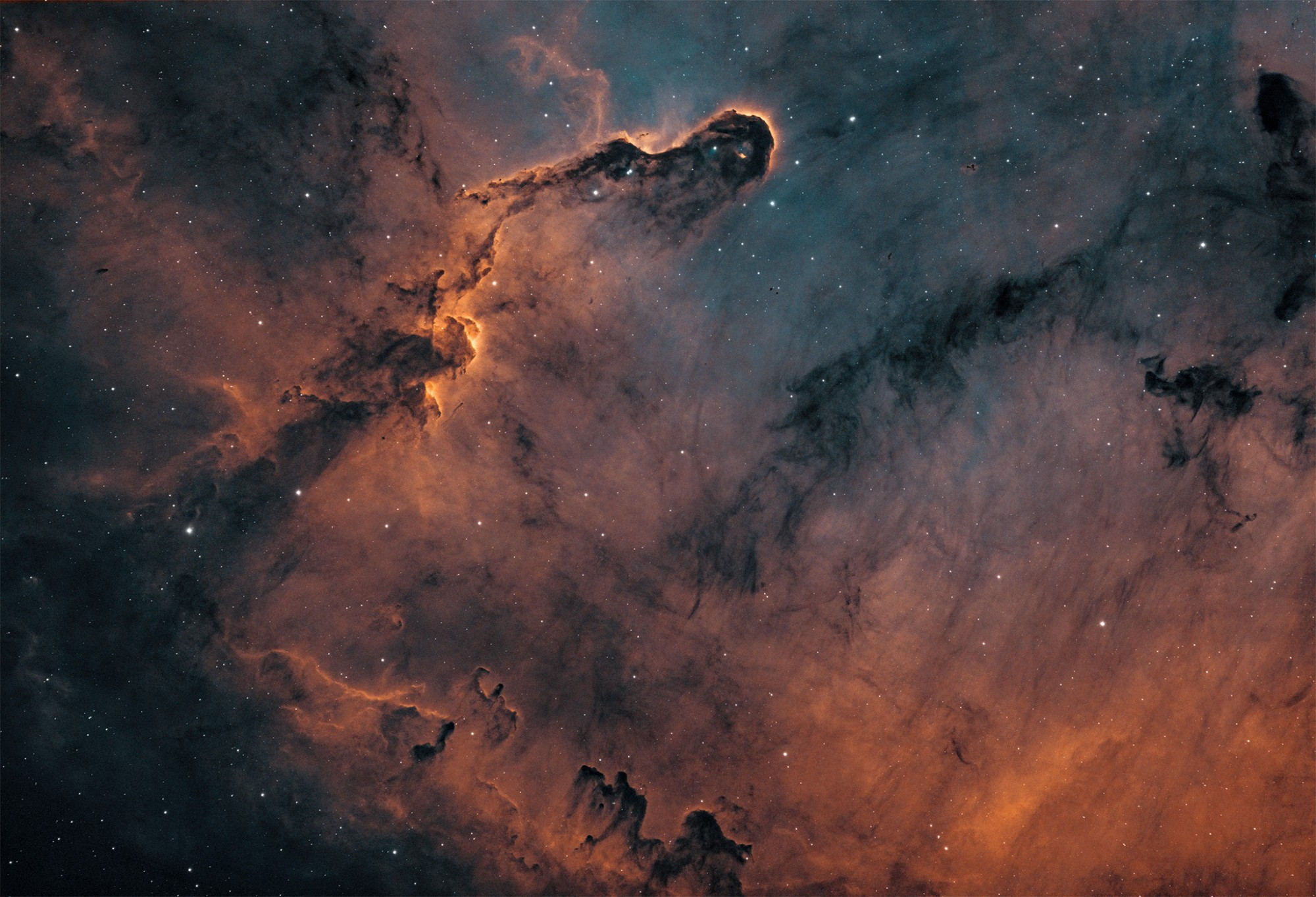
Aster - I know you like taking photos of the stars. Is that where Angus’ appreciation for the constellations came from?
Scott - Yes. Here is a photo I took of the Elephant Trunk Nebula from our backyard, which required 6 hours of 5 minute exposures each using h-alpha and oiii filters to block out everything but those bands of radiation. I wasn’t able to get into astrophotography until some years after the game came out so you’re just seeing some real special interest enthusiasm. But that’s fiction right? You write what you know. Like when you read a book and notice that the descriptions of horses and horse riding are just really noticeably written by someone who has spent a whole lot of time thinking about horses. Tolkien with languages, and also horses. Me with amateur astronomy.
Angus facts- his outfit and general build is from one of my best friends from high school. His family had a cat named Angus that they inherited from his grandmother and there was heavy suspicion that the grandmother died due to the cat chewing on her oxygen line or IV or some important tube. It was a while ago but that stuck with me. That best friend is now famous for being on tv sometimes, as himself. He’s great at it. I am very proud of him. Angus is named after the cat that killed his grandmother.
Aster - What do you think Gregg looks like head on? There’s been lots of speculation about this.
Scott - I can personally rotate Gregg’s head 360 degrees in my mind. In fact I am doing it right now. Not sure what the issue is. Please be more specific.
Aster - What’s inspiring you these days? What are you working on, thinking about?
Scott - I’m working on some things that I will not be talking about. None of them are a game at the moment, but I think folks reading this might be interested in one or two of them. Stay tuned in THE FUTURE.
As far as public stuff, over the past year I’ve been doing a lot of film photography. I got into it as a way of getting out again after I had a pretty bad health scare a couple years back, and also as a method of dealing with some other big life reset things that happened around the same time. It was very good to have something that got me out of the house and exploring, walking and climbing things, learning about places, meeting strangers, petting cats, finding hidden things, and just taking in the world. I develop my film in our basement (I have 11 rolls drying down there as I write this) and I roll my own 35mm rolls from bulk 100ft long reels. All of this makes it markedly cheaper to mess around with. I’d like to learn how to make darkroom prints this year. I mostly shoot old cameras that I’ve found at thrift or antique shops for cheap and then cleaned/fixed up. Since digital became dominant 20 years ago you regularly find these mechanical work of art film cameras that originally cost thousands on sale at an antique shop for like $20.
It seemed meaningful to be out capturing what exists right now. If you see me wandering around your small town photographing your ancient coaling tower and street cats please say hello.
Everyone else, stay tuned.
Sidebar- For people who are into it, my go-to camera for photo days is a Nikon n80. I actually have a backup of that one because 1) they are cheap and 2) the second one is this sort of beige rose gold color that feels like walking through a Macy’s jewelry department. It is loudly 90s in a way that a lot of common 90s nostalgia omits. It is Hootie & The Blowfish.