Low Floor, High Ceiling: Designing Usual June's Combat System
Low Floor, High Ceiling: Designing Usual June’s Combat System
From Usual June Director Adam Saltsman:
All the way from the earliest versions of Usual June’s combat system, we’ve had this goal or guiding light concept of “low floor, high ceiling” that I’ve been striving to hit in different ways. When we say the floor is low and the ceiling is high, what we mean is that it’s easy to get into the combat system and easy to participate in fights that look cool and feel good right away, but for more dexterous players or players who want to play more creatively or more expressively, there are paths and trailheads for that too. So the barrier to entry is quite low, but we also aren’t going to close off more advanced options. The two big things you get out of this approach is that when the floor is low, you don’t have to do as much tutorializing and explaining, and when the ceiling is high you can still have these really spectacular and interesting combat encounters.
People really don’t like sitting through explanations, in real life or in games. The best case scenario is maybe they’ve run into some real obstacle on something they’re already motivated about, and then they are willing to sift through an explanation to help with that specific obstacle or something. Problem-solution ordering is a big deal! But generally people really don’t like explanations. This is tricky to navigate and deal with if you are trying to design a cool combat system that offers fun abilities to the player, because real-time combat requires a lot of specificity and clarity. You want a really high degree of “if I press this button, this action will happen” consistency, or else the combat will begin to feel frustrating, too much uncertainty, too confusing, etc. So if you want to offer different kinds of actions, you quickly find yourself with a lot of buttons to press, and then players need an explanation about which button to press, which they don’t want to sit through.

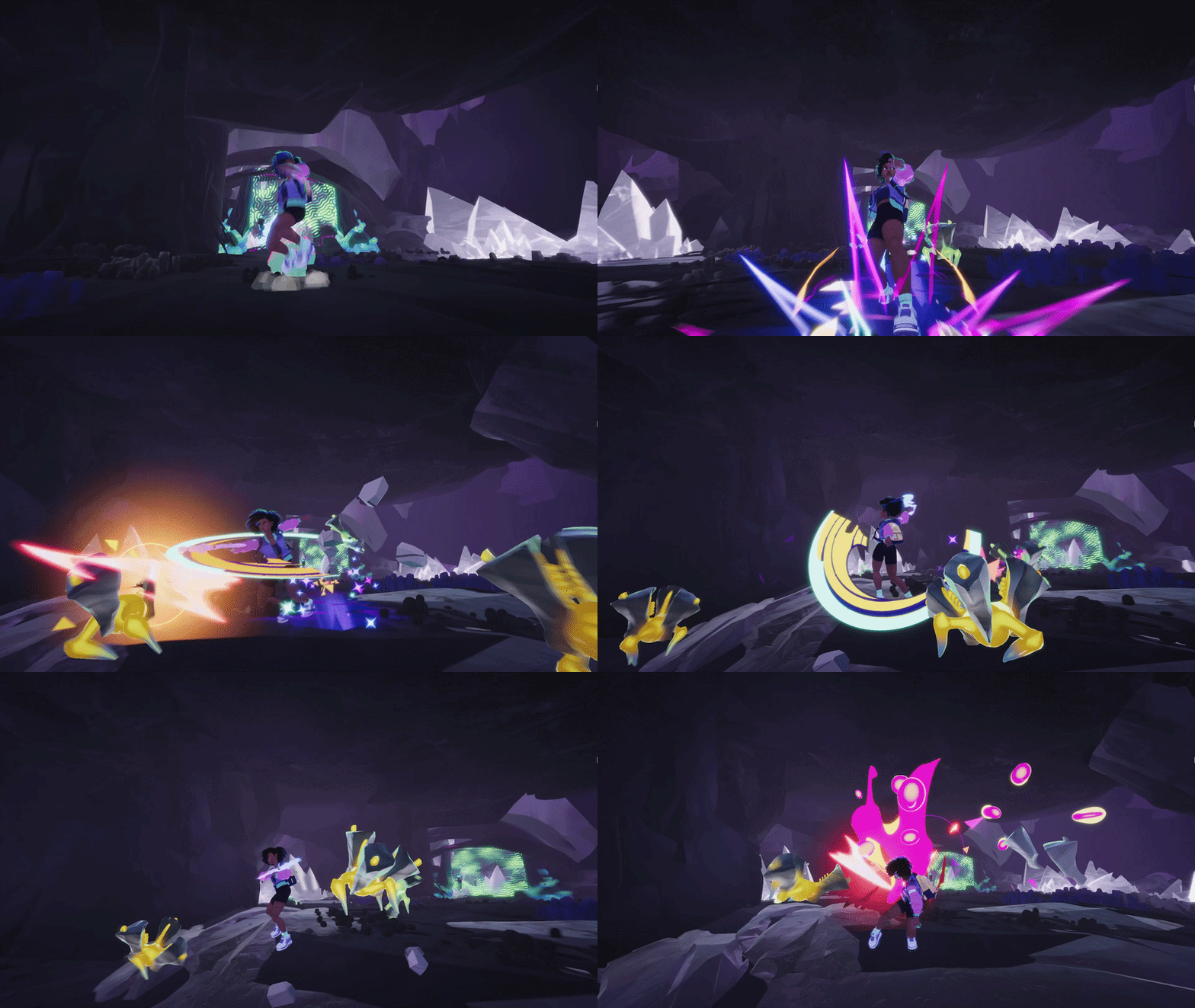
So to me, creating a low floor is about focus - you have to settle on a specific Primary Action and Secondary Action, and make everything in the game about that at some fundamental level. A Button and B Button! For some games that is Punch and Parry. For other games that is Melee and Ranged. For other games it is Attack and Dodge. But you want to know your Big Two, and build a frame around that. So for Usual June, that’s June’s light melee attack and her long slide ability. Everything in the game is designed first and foremost around the timings and properties of those actions. Enemy attack ranges and timing, the shape and speed of enemy projectiles, the size of arenas, all of that is designed against and around June’s two main combat actions first. Then I can just use different combinations of enemies in the arena waves to push on these timing and spacing windows and keep things interesting for this base moveset, without having to explain too much to the player.
Once those fundamentals are locked, once you understand what your low floor actually is, then you can start working on your high ceiling. But what do you put in there? You could add anything! What I’m usually looking for is stuff that fits into the fabric we already wove to support the low floor. For example, I try to avoid adding an enemy that you can only beat using this one item or this one move I just added. On paper that is expanding the game design, but as a player it’s actually taking away from the game design. Now to get past that obstacle I can only use that one option, now it’s a restriction or a constriction, not an expansion. Which can be interesting, but is counterproductive here.
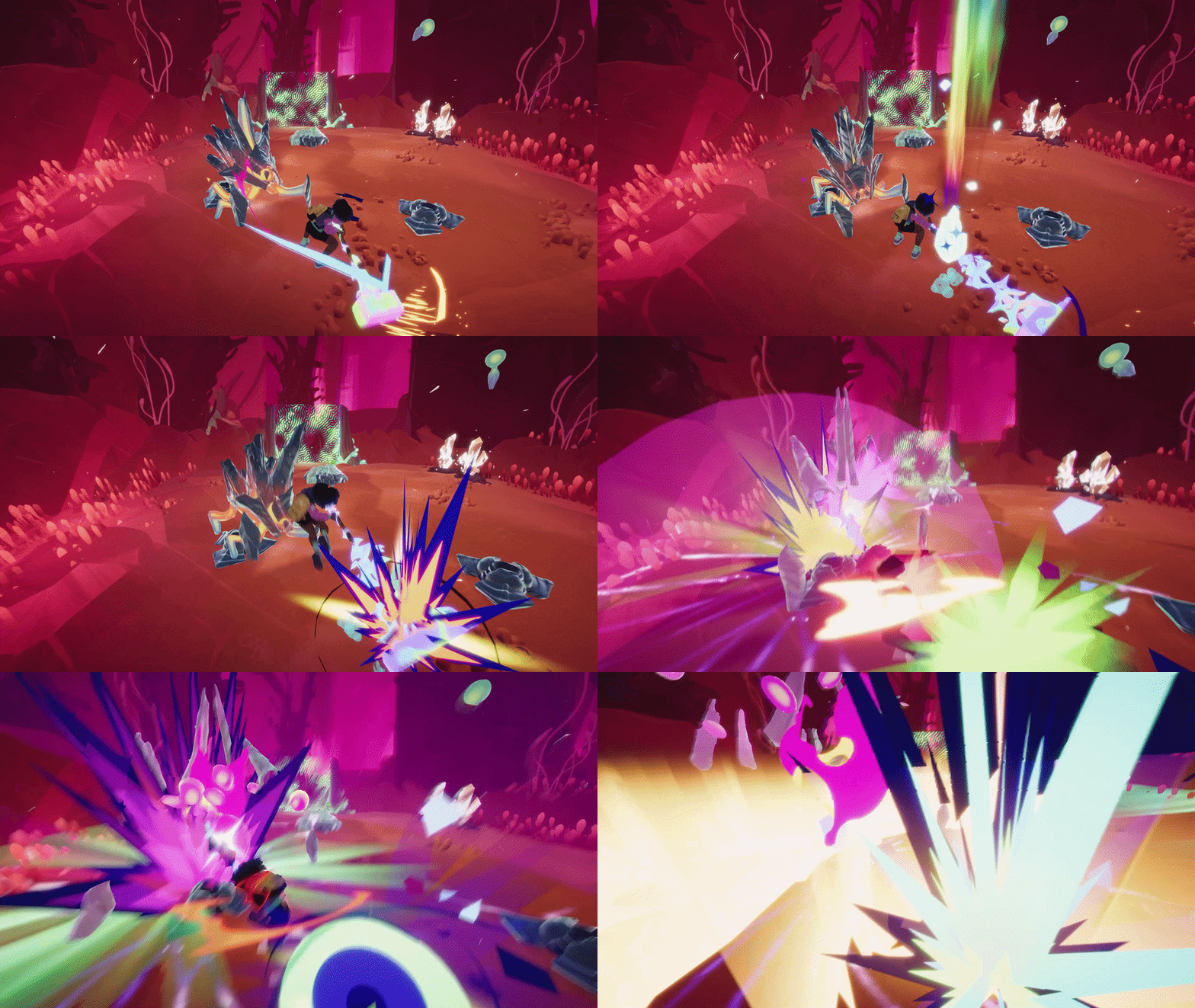
So to design June’s more advanced abilities, I approached it more categorically. We already have one core offensive ability, the light melee attack, so how do we build on that? Heavy melee attack is an easy one, sure, but the other fertile area is ranged attacks. Likewise, we already have a core defensive ability, that big slide dash, that’s our hero move, so how do we build on that? That ability is about mobility and escape, so maybe the direction we build in is more about giving options for the player to hold their ground instead. The goal is always trying to expand what the player can do, trying to avoid having abilities that are too redundant, and trying to avoid fussy Simon Says type mechanics while we go.
Low floor, high ceiling! To me it’s the best of both worlds. As a player, I love being given these simple ingredients and then looking for fun ways to combine them. In Usual June, it looks and feels really good to just duke it out with one of our spectral crab enemies using the basic attack and dodge abilities. But it also feels great to freeze them with a melee parry, plant a bomb under them, and retreat to a safe distance before they explode. Or box in a slimy crab and chuck a few parabolic attacks over the walls. Or queue a weapon switch so your light attack combo can end with a different weapons heavy attack instead. Maybe lean on the quickest weapons’ high DPS and pull your dodge inputs to get sidesteps, or build meter by dashing through a bigger creature’s overhead strike and lay them out with the heavy melee’s super instead. I’m super happy with the balance we’ve struck and really excited to see how folks approach the later combat encounters especially.
Wishlist Usual June on Steam!
A Usual June Preview with Polygon!
Earlier this month, Polygon released an exclusive preview of Usual June, complete with gorgeous new key art by Usual June Artist Alecia Doyley and lots of new screenshots! You’ll see sneak peeks of brand new environments, combat moves, characters, and more. Check it out!
The Usual June demo is still available to play on Steam, so give it a try while you still can! Meet the main cast of characters, explore a dark mausoleum, and fight your way out of…a pretty weird place.