November 2026 Newsletter

Usual June is launching January 20, 2027, meet some of our Quality Assurance team, learn more about Usual June’s level design, and more!
Usual June is now launching January 20, 2027
Hey Finji friends! You’ve probably heard the news that we delayed Usual June until January 20th. It is likely that you are familiar with our past work—we strive to make beautiful games and it is imperative to us that when we send them out into the world, they are as amazing as they can be. We’ve worked too long with too many brilliant developers to not launch our games on our terms. As we rocket through the next 11ish weeks, we wanted to thank you for your support— whether you have liked our games for a day or for 15+ years. We are regularly humbled by you and your love for our games.
<3 Adam & Bekah
Usual June will now be available January 20, 2027 on Steam, XBOX, GOG, Humble, and Itchio!
Usual June Level Design
This month, Usual June was featured in Unmistakable Fest, a celebration of art and animation in video games! If you missed it, you can catch up on the showcase here to see a sneak peek at some of Usual June’s levels and learn how they were made. The video features Finji Co-Founder and Director Adam Saltsman, Concept Artist and 3D Environmental Artist Beatriz de Abreu, and Level Artist Cameron Bragg. Even Cameron’s cat makes an appearance!
Usual June was also featured in Cozy After Dark and The Mix this month! Click on the links to check out those trailers.
Wishlist Usual June on Steam!
Finji’s QA team is really cool!
Finji’s Quality Assurance team is always hard at work, but lately they’ve been pretty focused on getting TUNIC ready for Nintendo Switch 2 and Usual June ready for release! We asked two of them to talk a bit about their work. Want to hear more from our QA team or another team at Finji? Let us know in the Finji Discord!
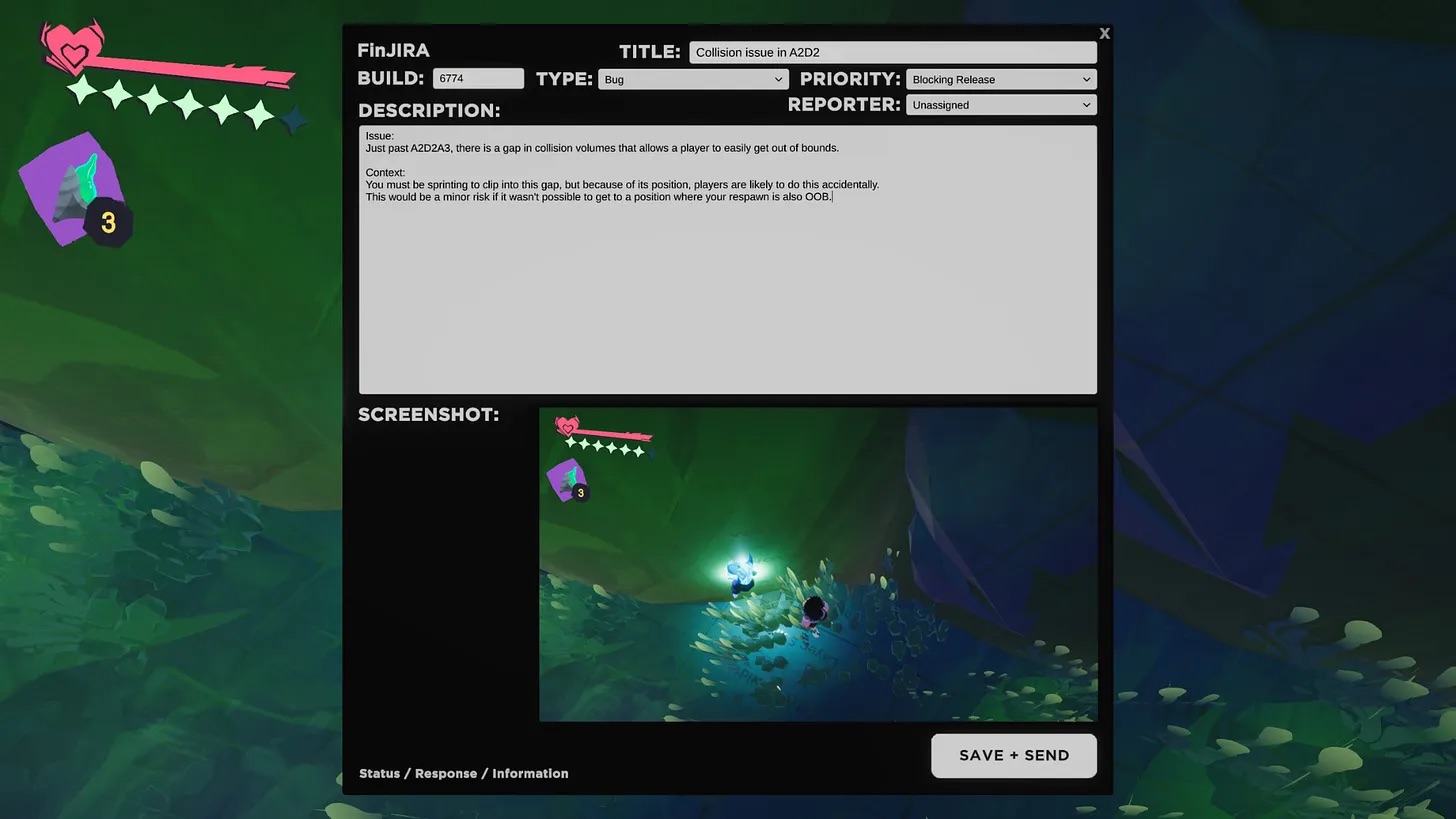
Finjira, Jonah Davidson
Besides testing games with the QA team, I do a bit of everything at Finji and recently I’ve been trying out tool development. My current project is “Finjira”, a little package that can be dropped into our games to give us a one-button way to instantly capture bugs and send them to JIRA (a bug-tracking service). Usual June is the first project we’ve used Finjira for, but my goal is to have it available for both our games and games we publish.
Making Finjira has been a long process: researching similar tools, navigating JIRA’s systems, testing open-source libraries, discovering how game engines work (or don’t work) with those libraries, and then doing it all again when things update and Finjira breaks. It’s been an uphill battle, but it’s worth it - it’ll help the QA team with our work, and it’ll inform our dev team about bugs sooner, and it’ll help our collaborators and other testers. Removing barriers, building bridges, lightening the load.
The messier everything in life gets, the more I fall back on this DIY mindset. If you need to do something tough and a tool could help, you can just make your own! It will always take some work, it may require learning a little or a lot, and it may not be easy (but it’s probably easier than you’d think). It doesn’t even have to be a tool; it could be finding a method to organize your thoughts that actually fits how you think, or facing down an ongoing problem with an answer that may be imperfect but is the best you can do right now. QA can feel a bit like problem-seeking, so I like to mix in some problem-solving, too.
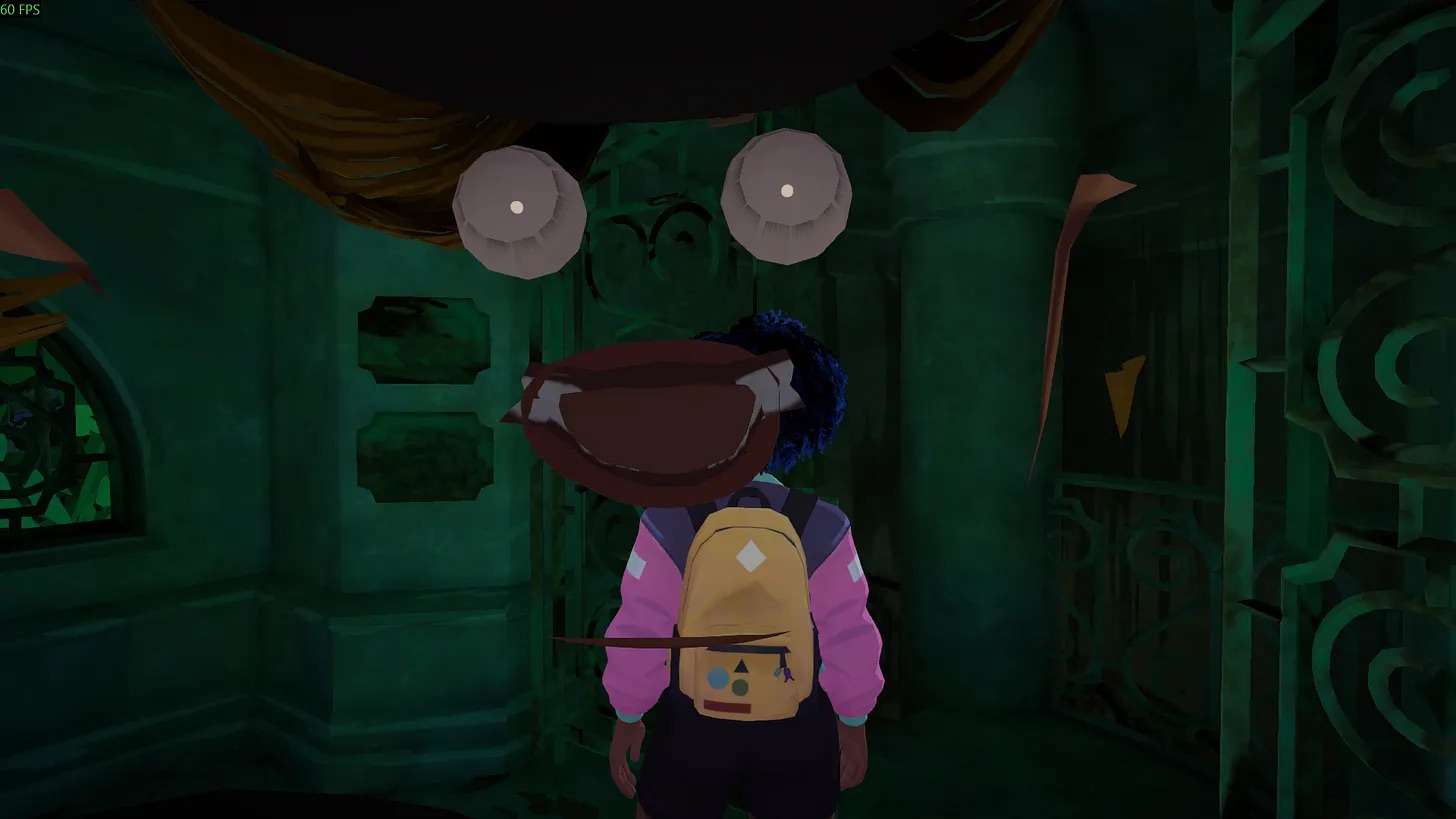
QA and Player Perspectives, Taylor Normington
When I first started working in QA four or so years ago, I was very preoccupied (read: stressing myself out) with striving to see the games I tested not from my own, fixed perspective, but instead from the breadth of player perspectives. The world that you and I experience is the same, and yet we can see things differently in very big and very small ways and that makes the world all the richer (and all the more complex) for both you and I. Frickin’ perspectives! How the heck do I experience the game as not-me?
One of the tricks with QA, I’ve found, is priming your brain to be in ‘wondering what might happen next’ mode, even when you are playing a game post-release for a console port and you may have 100% completed said game 100 times (Chicory, I am looking at you). And curiously, when I am in ‘wondering what might happen next’ mode on Tuesday and Thursday, the aspects of the game which leap out at me as striking or obvious are often completely different. It’s as though not-me on Tuesday is me on Thursday (or vice versa!) and this radical shifting of perspectives is, in fact, not me at all, but rather, within me.
I guess the point is: games are often felt as much as they are played and players experience different feelings and come to games with different experiences (and wants! and needs! and moods!) and while there is a lot we share in common when we play the same game, there is a lot of beautiful differences between one player and another as well. Or between you on Tuesday and you on Thursday. When I really meditate on that thought, it makes me feel a bit closer to the world at large, and that is real nice.